In June of this year, Health and Human Services Secretary Robert F. Kennedy Jr. slammed harm reduction services, claiming that they have “led to the proliferation of open-air drug markets around the country” and that “harm reduction doesn’t work.” This came as part of a larger effort by the current administration to reduce funding for these safe consumption services over the last year. In Trump’s Executive Order 14321, he directed federal agencies to cut and reduce funding for these programs, again claiming that they “facilitate illegal drug use.”
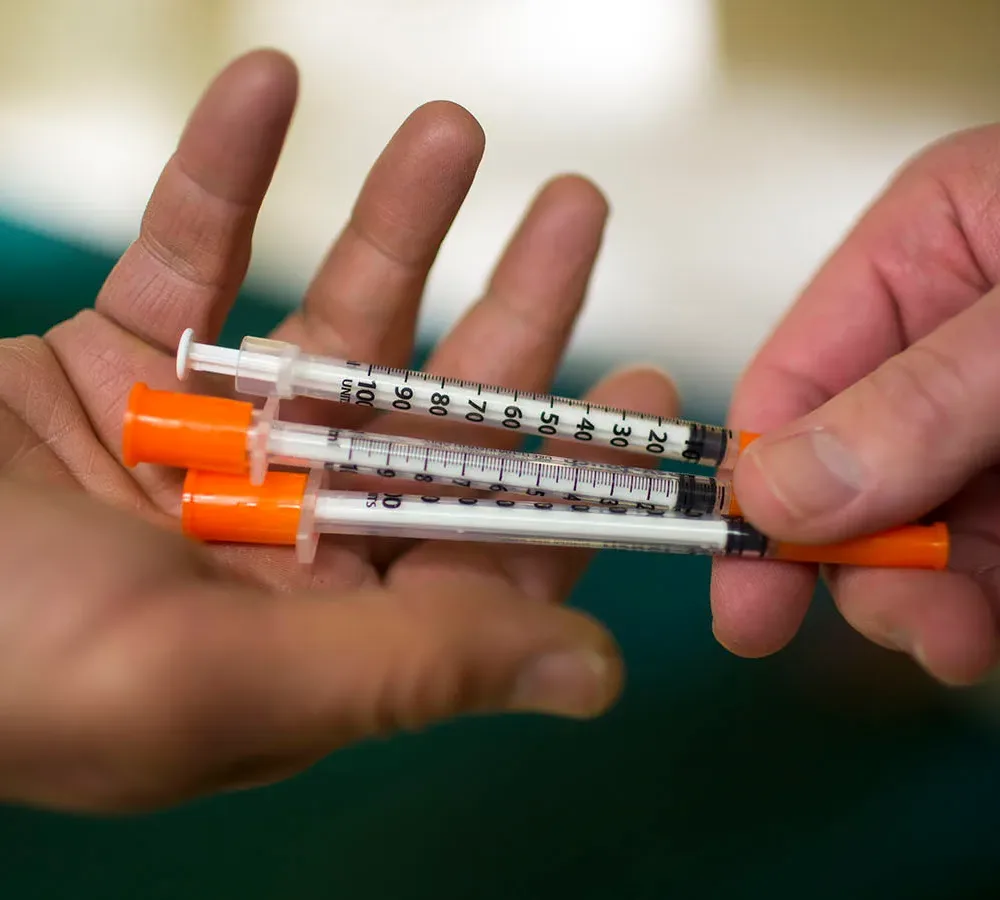
The main goal of harm reduction services is, of course, to reduce harm to people already suffering from drug use. One of the most contentious examples of this is needle-exchange programs, which provide clean syringes to reduce the spread of HIV and other diseases. Syringe Service Programs (SSPs) began as illegal underground services that traded dirty needles for clean ones during the HIV/AIDS crisis in the mid to late 80s, and it wasn’t until major organizations like the American Medical Association began accepting these practices almost two decades later that they fell into popular use. All the research points in one direction—that they are effective at their intended goal: one systematic analysis reviewed a wide set of studies back in 2014 and found strong evidence to support the claim that SSPs reduce HIV rates across intravenous drug users.
So the question is: where do the current administration and others’ fears come from—and are they valid?
The most common claim is that making drug use safer makes non-drug users more likely to become drug users or keeps people on drugs. While this may seem logical at first, it completely misunderstands the drivers to use drugs in the first place. People who first use drugs don’t apply a rigorous cost-benefit analysis to the degree that no risk of contracting HIV suddenly turns them over to the side of drugs. And those already suffering from addiction do not see avoiding HIV or hepatitis as a sudden justification to continue their compulsive addiction to drugs. Instead, people get hooked for a variety of reasons, leading their brain chemistry to alter so that their natural dopamine or serotonin levels are lower, and dependency forms. They may want to reduce the long-term, negative side effects, while also struggling to fully quit. Anyway, whether harm reduction encourages substance use is an empirical question, not one that can be settled by assuming that safer practices necessarily produce more users.
Contrary to these concerns, one study in Baltimore looked at about 4 years of patient care and found that needle-exchange programs provided important linkages to services that help people detoxify and get off their drugs. Access to hospital services increased the odds of all patients entering detoxification, and among some groups, the services increased admission rates fourfold. What matters is getting people into care, and giving out needles (while it may seem counterintuitive) is doing exactly that.
Another key concern is that providing needles will lead to the streets being infested with them, but the data again begs to differ. A 2012 study led by professor of medicine Hansel E. Tookes compares syringe disposal practices in a city with needle and syringe programs, San Francisco, to one without, Miami. In visual observations, the city without the harm reduction services had over 8 times more needles on the street, and through surveys, 95% of Miami users improperly disposed of needles, whereas only 13% did so in San Francisco. The key thing that is too often ignored is that needle exchanges and other programs do not exist in isolation. Rather, they are built in tandem with detoxification programs, needle disposal, and education initiatives—and they provide an important bridge to these services.
9 states have no legal framework for needle-exchange programs, and the federal government is actively waning its support. Now, it is more important than ever to focus on the science of the issue. Emotion-based politics are increasingly pervasive in our country’s policymaking, as we have seen a shift from “evidence to intuition” in Congressional speeches. While emotion and intuition are powerful rhetorical tools that inspire political change, we must never allow feelings and whims to supersede science.
Thankfully, though, progress has been made. US drug deaths saw an unprecedented turnaround back in 2024 and fell around 14.5% in just one year. This is by no means solely because of free-needle programs, but when the evidence points consistently in one direction—that they save lives and reduce harm—we should listen to the evidence. Otherwise, we risk reversing the progress that our country has fought so hard to make.